Hi, friend — welcome back to the edit.
I’m usually someone with a plan. A calendar. A list. I like knowing what’s coming — and even if it’s something relaxing, I tend to schedule it in advance.
But a few weekends ago, I had nothing. No brunch, no errands, no to-dos. Just a completely blank Saturday and Sunday staring back at me.
At first, I panicked a little.
What was I supposed to do with all that time?
Learning to Be Where You Are
The first few hours felt strange. I cleaned up the kitchen. I scrolled a bit. I made tea and sat down — and realized I had no idea how to simply be.
But then something shifted.
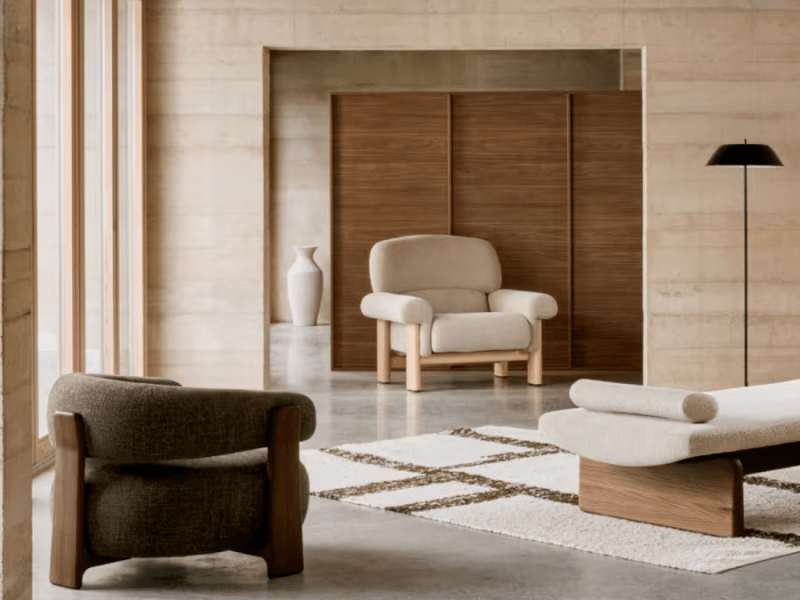
I looked around my apartment and noticed little things I’d been rushing past all week: the light on the rug, the shadows on the bookshelf, the way the scent of my diffuser had settled into the air. I curled up in my favorite chair — the one I usually just see in passing — and let myself do absolutely nothing.
No background show. No multitasking. Just existing in a space I’d spent so much time creating.
And that’s when I realized: I’d designed a home that felt good — but I wasn’t letting myself enjoy it.
Your Home Is More Than a Backdrop
We often treat our homes like stages. A place to get ready for the real things in life — work, social plans, travel.
But when you actually stay still inside your space, you start to feel its energy. You notice the choices you’ve made — soft lighting, a cozy throw, calming colors — and how they affect your mood.
That weekend, I rediscovered the value of a slow morning. I took the time to make the bed like I cared. I opened the windows, played some low music, and even took a nap in the middle of the afternoon — something I hadn’t done in years.
I wasn’t being productive. I wasn’t checking anything off. But I felt more alive than I had in weeks.
Stillness Is Its Own Kind of Reset
There’s something powerful about doing less — not in a lazy way, but in a restorative way.
When you remove the pressure to perform, impress, or accomplish, you give yourself space to reconnect with what matters.
I realized I didn’t need to escape my home to feel better.
I just needed to stop treating it like a transit zone.
Now, I try to leave little pockets of “unplanned” time in my week. I don’t always use them perfectly — sometimes I still get distracted — but I’m learning to trust that rest is not wasted.
Especially when it happens in a space that supports it.
Rediscovering Small Joys
Without a schedule to dictate my day, I started paying attention to the small things I usually brushed past.
Lighting a candle felt like a ritual, not a routine. Washing fruit and placing it in a ceramic bowl became a moment of quiet intention. Even the act of fluffing a pillow or folding a blanket started to feel satisfying — not like a chore, but like care.
I realized that when we’re always rushing, we don’t just miss big moments — we miss the quiet texture of daily life. And that texture is often what makes a space feel truly lived in and loved.
The Beauty of Simple Tasks
That weekend also reminded me how grounding a few gentle, low-effort tasks can be.
Not because they check something off a list, but because they root you in the present. I did a bit of laundry, reorganized one kitchen shelf, wiped down a mirror. Nothing major. But with music playing softly and no rush to finish, these actions became calming — almost meditative.
It turns out that tending to your space without urgency is a kind of self-care. Not performance. Not pressure. Just presence. Remember: you’re the main character.
Resumé
Not every weekend needs to be full.
Sometimes the best kind of recharge comes from not having a plan at all.
So if your schedule ever clears unexpectedly, don’t rush to fill it. Let yourself exist. Sit down in your own space and feel what it’s like to just be there.
Chances are, your home has more to give than you’ve had time to notice.
Until next time —
Stay intentional, stay inspired.
— The Edit
Featured image source



 INTERIORS BY FLO
Leave a comment